Most of the casework and campaigning we do, we do ourselves.

Especially for smaller everyday issues such as potholes, broken streetlights and uncollected bins. We become aware of the the issue, we reported it to the council to be fixed, and then we report back on what we’ve done to residents. This is sometimes referred to as Pavement Politics.

But for larger issues, involving the community in your campaign and working with them to deliver improvements, can both deliver better outcomes and empower residents to make a difference to their area themselves. This is known as Community Politics.

It is a deep-rooted principle at the heart of Liberal Democrat action. ALDC’s influential 1980 publication The Theory and Practice of Community Politics is still an inspiring read.

Take the example of a messy park in your ward. You have the ability to make a difference all by yourself. You could organise for the council to carry out a clean-up, replace some of the old equipment, put a bench in there and then let residents know everything you have done in your next Focus leaflet.

But alternatively, you could also involve the community in the project right from the start. How about conducing a survey to find out what people would like to see in the green space? Maybe invite people to a public meeting to discuss possible uses for the land and work towards setting up a ‘friends of’ group of residents to look after the park long-term?

By doing this you have not just empowered the community to take ownership of their public space, but you have probably delivered an even better community park in the process. The ‘friends of’ group can apply for external funding. That might enable you to get even more equipment and benches in the park. Rather than one council clean up, the resident’s group could carry out their own regular litter picks regularly. Everyone benefits from the community’s involvement.

That is the crux of Community Campaigning. Lib Dems don’t just fix problems for people. We empower people to fix their own problems. Not every local issue requires such an approach. You are not going to organise a petition to fill every pothole or fix every streetlight. But for larger issues and projects think about how you can involve the community in the campaign.

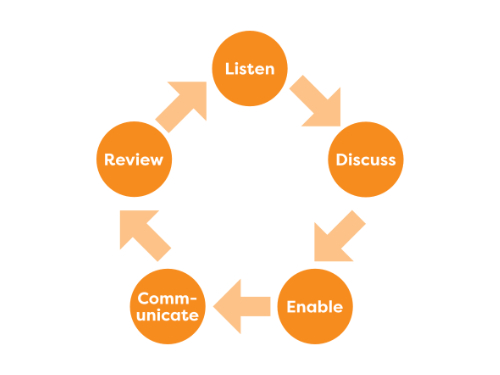
Let’s look at the Community Campaigning cycle in more detail:

Listen: The first step is to listen to residents. Find out what improvements they would like to see. There are many ways you can do this. Going door to door with a resident survey, or delivering a survey to the whole ward. You can organise a ward forum for residents to come along and raise issues. You could simply keep your ear to the ground and monitor local Facebook pages to see what issues are being raised again and again. By doing this listening exercise you will build up an understanding of what issues the community wishes to tackle.

Discuss: Once you have an understanding of the most important local issues, you need to discuss possible solutions with residents. This is where your council experience is so valuable. You will know what is possible and what is not. What funds are available. How the council can support projects, and where residents will need to step up. This can also be done through a public meeting or a survey. But residents should have an opportunity to discuss how you all move forwards on the issue.

Enable: This is how you empower residents. Maybe the issue requires a petition to the council with lead petitioners. Could a resident’s group be formed specific to the issue? Is there mileage in a Facebook group that hundreds of residents can join to receive updates on the issue? Could meetings be set up between lead community activists and council officers? In all of these scenarios you are still a community leader, but you are letting residents take a lead-role in the process and the decision-making. It is now their project as much as yours.

Communicate: Just like every other piece of casework you do that has community benefit, you need to communicate what you are doing to the wider community (those not involved in the campaign) and the positive outcomes you have achieved. The principle is exactly the same. You deserve to get the benefit and recognition for your hard work. But here it is also important to credit the residents or resident groups who have worked with you on the project. Give them the recognition they deserve and motivate them to continue campaigning for local improvements.

Review: Think about what worked well and what didn’t in your community campaign. Are there ways you can improve the amount of engagement you get? Is your council set up to effectively support community volunteers? Are there wider changes you need to recommend to enable community campaigning to be facilitated by your council? Your experience will help you put together your next community campaign.

Think about your ward or division. What are the big issues that residents raise with you? How can you empower them and involve them in the solution?

Leave a Reply

Your email address will not be published. Required fields are marked *