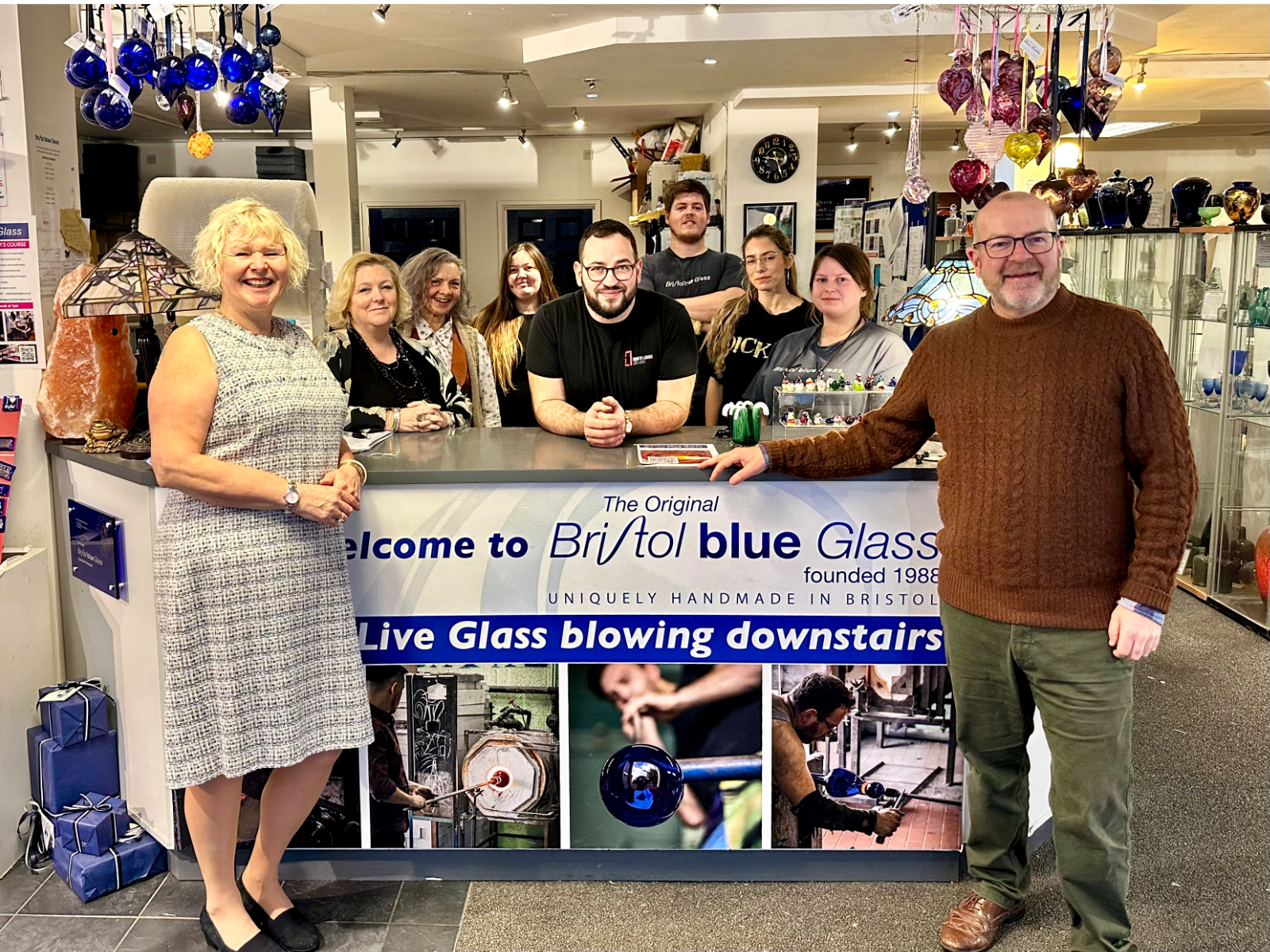
By Bristol City Councillor Andrew Varney (Brislington West)
Across Britain, high streets and local businesses are facing mounting financial pressures. Rising energy bills, higher employment costs, expensive premises and changing consumer habits are making it increasingly difficult for businesses to survive. When a business closes, the loss can extend far beyond jobs and livelihoods: communities can lose traditional skills, local identity and an important part of their heritage. This was the case with the world famous Bristol Blue Glass based in my ward of Brislington West in East Bristol.
When we think of Bristol, we think of Brunel, Banksy, bridges, balloons — and Bristol Blue Glass. Its distinctive blue glassware has become part of our city’s identity, and even our taxis are painted cobalt blue! Glassblowing has a long history in Bristol, and the most recent company producing glass using traditional methods was founded in 1988.
So, when I discovered that the lease on its Bath Road premises in my ward of Brislington West would not be renewed, and that the business needed to relocate, I was determined to help. The company was struggling to find suitable new premises, and its chief executive was close to issuing redundancy notices. For me and many local residents, the prospect of losing this historic craft was deeply concerning.
After visiting the glassworks and discussing a plan of action, I launched the Save Bristol Blue Glass petition. Within weeks, more than 8,000 people had signed it, demonstrating the strength of feeling across Bristol and far beyond. We even received signatures from as far away as Canada, Australia and New Zealand!
The aim was to raise the profile of the company’s plight and encourage someone, anyone, to come forward with an offer of help. But this was about much more than saving a single business. It was about protecting skilled jobs, traditional craftsmanship and an important part of Bristol’s cultural and artistic heritage.
As Managing Director Suzanne Adlington explained, her husband had founded the company in 1988 with a vision of revitalising glassmaking in Bristol. Over the years, they had built an international reputation while navigating economic downturns, the pandemic and other challenges. Their ambition was to find a permanent home, ideally in a central location, where the craft could continue and be passed on to future generations.
The campaign also gave a voice to the people whose livelihoods depended on the business. David Barry, the General Manager and Hot Shop Manager, had spent 16 years at Bristol Blue Glass, perfecting his skills as a professional glassblower and training apprentices. He had even spent several years training in Murano, Venice, renowned for its glassmaking tradition.
He described a close-knit team passionate about their craft and explained how devastating it would be to see their collective talent dispersed. His words brought home what was really at stake: not just a company, but years of accumulated expertise and a community of people dedicated to keeping an ancient craft alive.
The petition attracted widespread support and helped keep the issue in the public eye. We raised the matter at City Hall and, crucially, worked with council officers to explore practical alternatives.
Together, we identified fantastic new premises on Bristol’s Harbourside, at Albion Docks. This was a significant breakthrough for a business that had struggled to find somewhere suitable to continue its work. It showed what can be achieved when community campaigning is combined with constructive engagement inside the council: the petition demonstrated how much the business mattered to people, while working with officers helped turn that concern into a practical solution.
Sadly, Bristol Blue Glass closed before it could move into its new home.
The company’s former chief executive subsequently spoke publicly about the financial pressures behind the closure, including rising energy costs linked to the war in Iran and increased employers’ National Insurance contributions. Its experience highlighted the vulnerability of businesses facing costs they cannot easily absorb, particularly those dependent on energy-intensive manufacturing.
It was a bitter disappointment after so much effort. Finding new premises had offered a way forward, but local councillors cannot control international events or eliminate every financial pressure facing a business.
Yet there has been a very welcome silver lining. The story has not ended with the closure of Bristol Blue Glass. Former employees have since relaunched the enterprise as Bristol Glassworks, giving this distinctive craft a new opportunity to survive and flourish.
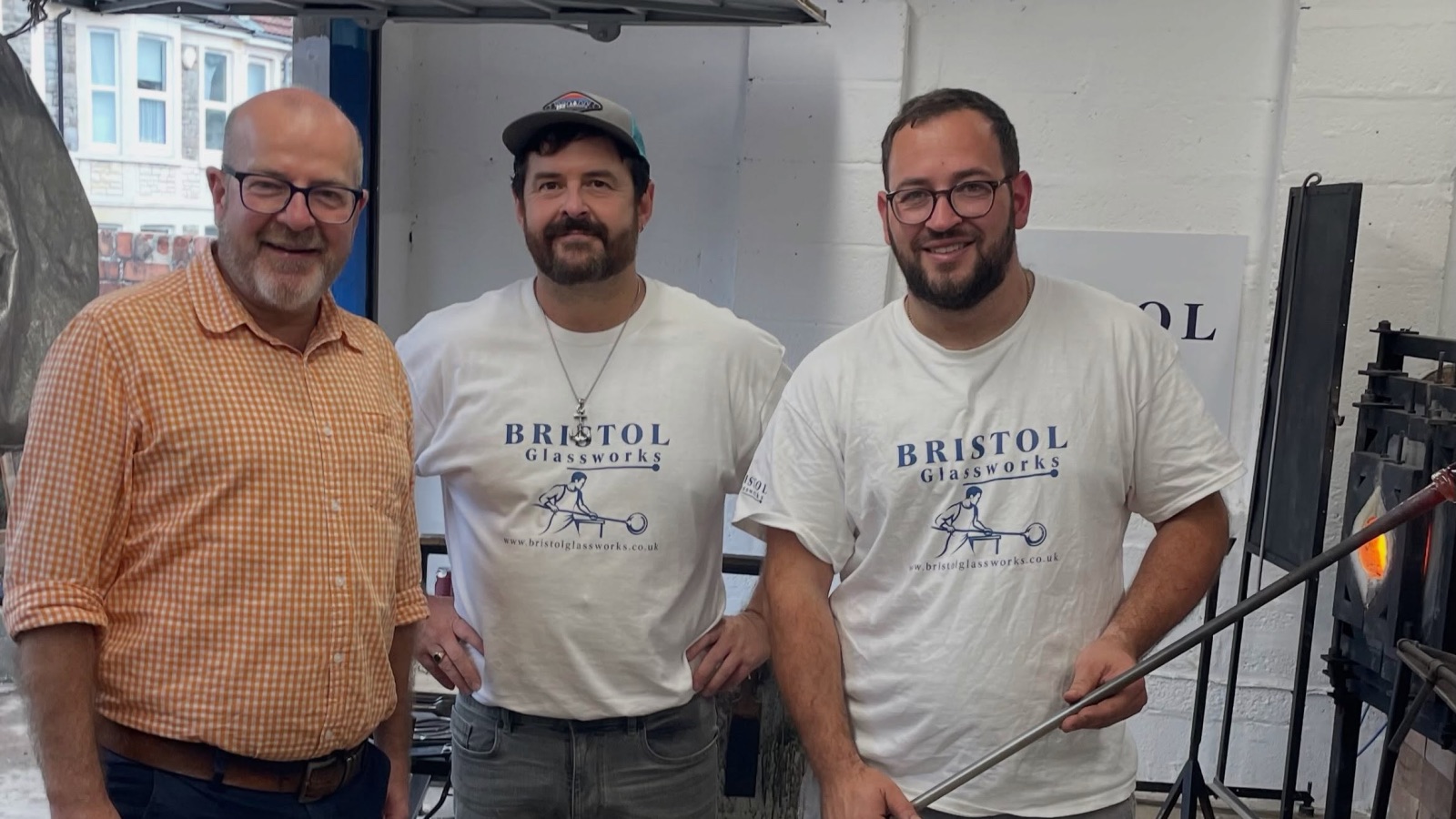
Their initiative deserves enormous credit. Traditional industries depend on people with the skills, knowledge and determination to carry them forward. The former employees’ decision to establish Bristol Glassworks demonstrates that, even when a business closes, its expertise, traditions and creative spirit need not disappear.
For me, this is an encouraging outcome following a campaign that began when the original company faced losing its premises. Although we could not prevent its eventual closure, thousands of people came together to support the campaign, and our work with council officers identified a potential new home. The determination of the former employees has now created a new chapter for Bristol glassmaking.
There is an important lesson here for councillors. Community politics means more than raising awareness or expressing concern. It means listening to residents, building support, working constructively with council officers and pursuing practical solutions. It also means recognising the limits of what local intervention can achieve, while supporting those who are determined to preserve what matters to their community.
We cannot guarantee that every threatened business will survive. But we can ensure that local concerns are heard, opportunities are explored and the people fighting to preserve our heritage are not left to struggle alone.
Bristol without Bristol Blue Glass once seemed unthinkable. Thanks to the dedication of its former employees, Bristol glassmaking has a future — and that is something worth celebrating.